Throughout the month, we shared a closer look at Preschool 1, our classroom for children ages 3 to 4. It's a year filled with small moments that add up to big growth.
A child chooses a learning center without help. A classmate offers to share. Someone remembers to put the blocks away before moving to the art table. A child asks a new question, tries a different solution, or holds a writing utensil with a little more control than before.
These everyday moments are how independence begins.
Learning to Be Part of a Classroom
Preschool 1 children are beginning to understand classroom routines and expectations. They're learning to listen during group activities, work beside their classmates, care for shared materials, and complete simple tasks with less help.
The children still receive plenty of support from their teachers, but they're also given room to try. That balance helps them build confidence while understanding that they're an important part of their classroom community.
Choosing How to Learn
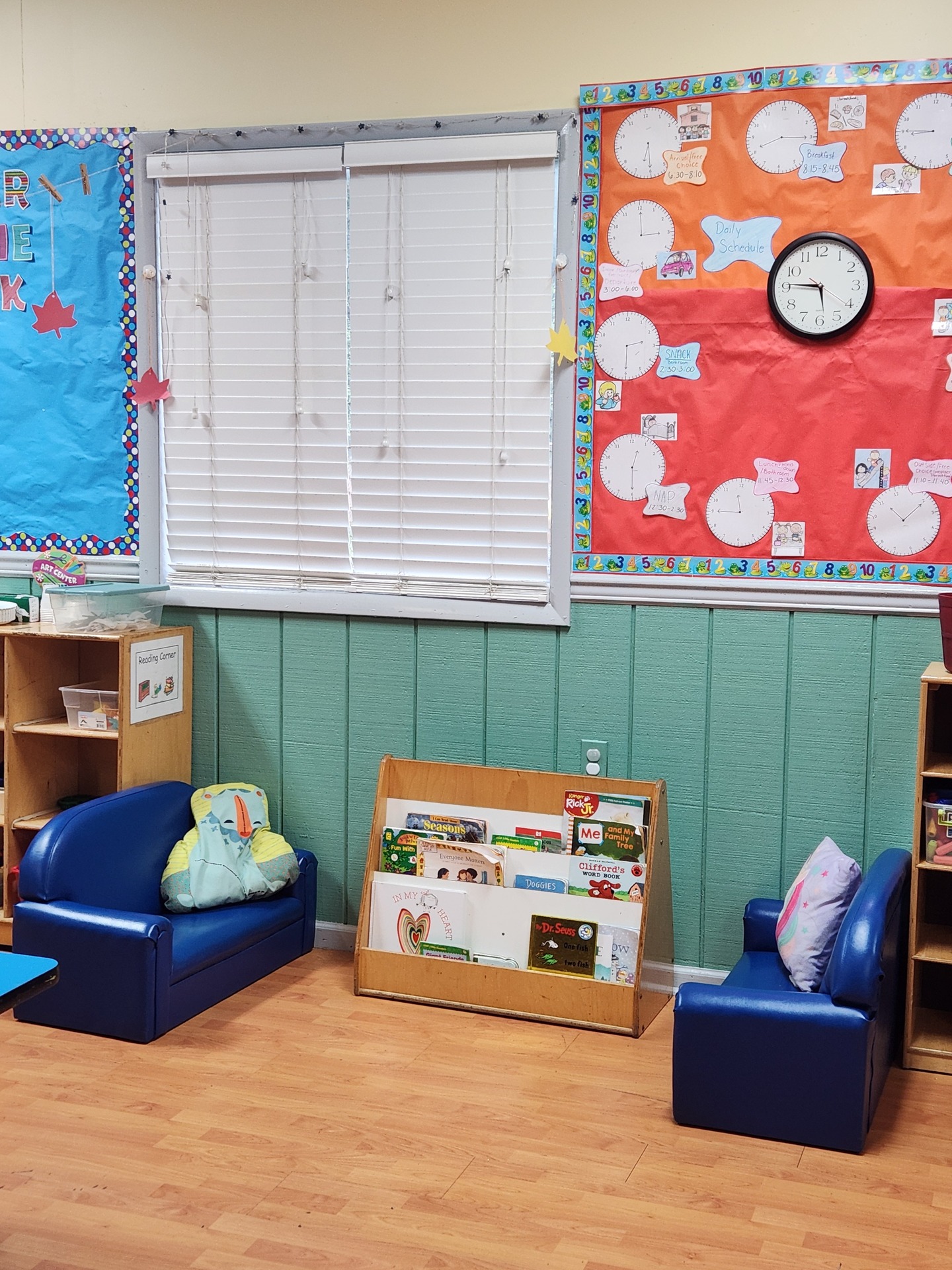
Our Preschool 1 learning centers give children different ways to explore throughout the day. They can build with blocks, look through books, use manipulatives, explore early science and math ideas, make music, create art, or use their imaginations in the kitchen and dramatic play area.
These choices support curiosity and help children become active participants in their own learning. While they're playing, they're also practicing language, problem-solving, cooperation, creativity, and critical thinking.
Strengthening Everyday Skills
Preschool 1 is also a time for children to continue developing practical skills. They work on tasks such as using forks, spoons, crayons, pencils, and paintbrushes with more control. Play-Doh, painting, crafts, sand, and other sensory experiences help strengthen the fine motor skills needed for writing and independent daily routines.
Children can also receive continued support with potty training as they transition from the toddler years. Support Based on Each Child's Needs
No two Preschool 1 groups are exactly alike. Our teachers plan activities based on the children in their classroom and adjust materials or experiences when children need a different level of support.
Fall, winter, and spring assessments help teachers track each child's progress. Parent-teacher conferences give us time to talk with families about what their child is learning, where they're growing, and how we can continue working together.
Learning Should Still Feel Fun
Preschool 1 has structure, routines, and meaningful learning goals, but to the children, it still feels like art, music, stories, movement, discovery, and play. That's exactly what we want.
At The Art Learning Center, we're a school where young children can enjoy the experience of learning while building the skills they'll need for preschool, kindergarten, and beyond.
Thank you to our Preschool 1 families and teachers for letting us share these special everyday moments. If you'd like to learn more about our programs in East Stroudsburg, visit our website.