Three is a year full of change. Children want to try things for themselves, ask more questions, make their own choices, and spend more time playing and learning with friends.
Our Preschool 1 program at The Art Learning Center is designed for this important stage. Created for children ages 3 to 4, it gives them the structure of a classroom while keeping learning active, creative, and fun.
Learning What It Means to Be Part of a Classroom
For many children, Preschool 1 is where they begin to understand classroom routines and expectations. They practice listening in a group, following simple directions, working alongside classmates, sharing materials, and cleaning up one activity before beginning another.
These routines may seem small, but they help children build responsibility and confidence. They're learning that they can take care of their belongings, make choices, contribute to the classroom, and do more for themselves.
A Classroom Made for Exploration
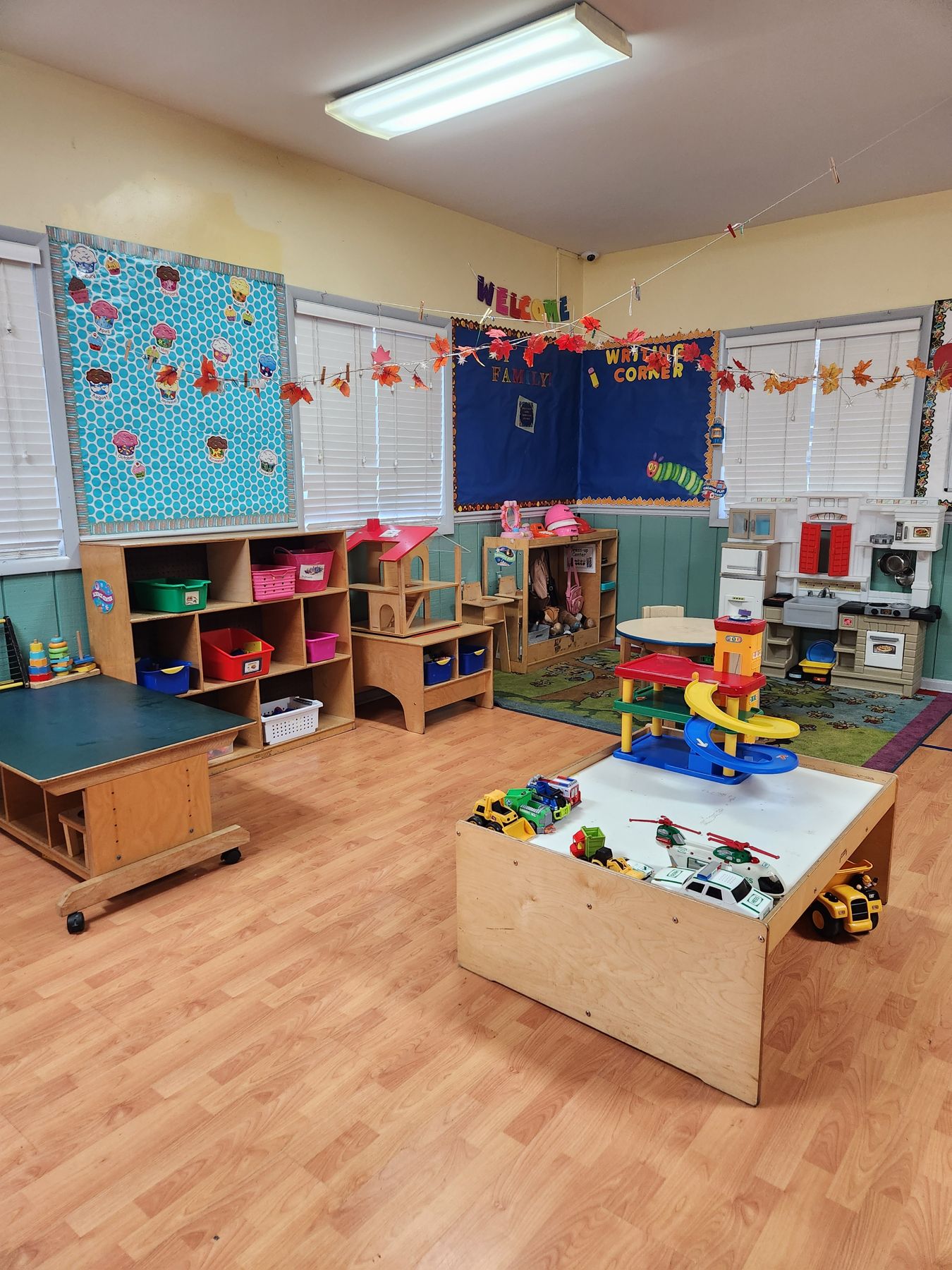
Our Preschool 1 classroom is divided into age-appropriate learning centers. Children can move through areas for blocks, kitchen and dramatic play, science and math, books, manipulatives, music, art, and sensory exploration.
One child might build a tall block tower while another looks through a favorite book. A small group may be creating art, exploring sand, working with Play-Doh, or pretending together in the dramatic play area.
As children choose where and how to play, they're doing much more than keeping busy. They're solving problems, using their imaginations, practicing language, working with others, and learning how to make decisions.
Art, Music, and Hands-On Learning
Art and music are a big part of Preschool 1. Children paint, make crafts, sing, move, and explore different materials. Sensory activities may include Play-Doh, sand, painting, and other hands-on experiences selected for the needs of the classroom.
These activities encourage creativity while also building important fine motor skills. Every time a child holds a crayon, shapes Play-Doh, uses a paintbrush, or practices eating with a fork and spoon, they're strengthening the small muscles they'll eventually use for writing and other daily tasks.
Early Academics That Still Feel Like Play
Preschool 1 children are introduced to basic letters and early academic concepts through classroom conversations, group activities, stories, music, art, and play.
They're also encouraged to ask questions, think through problems, and try different solutions. Our goal isn't to make learning feel overly formal. It's to help children become curious, confident learners who enjoy discovering how things work.
Meeting Children Where They Are
Children don't all develop at the same pace or need the same kind of support. Our teachers observe how each child learns and adjust lesson plans, classroom materials, and activities to support the group in front of them.
Preschool children receive fall, winter, and spring assessments. Parent-teacher conferences give families and teachers time to talk about each child's progress, strengths, and next steps. This helps us work together as partners in each child's education.
Preparing for the Next Step
Preschool 1 is a year of growing independence. Children continue working on self-help skills, including finishing potty training when needed and becoming more comfortable with tasks such as using eating and writing utensils.
By combining classroom structure with art, music, sensory experiences, and play, we help children build the skills they'll carry into Preschool 2, pre-K, kindergarten, and beyond.
If you're looking for a preschool where your child can learn, create, play, and feel known, we'd love to tell you more about The Art Learning Center.